- Design 1st
- Posts
- What Actually Gets Hardware to Market
What Actually Gets Hardware to Market
After 30 years and 1,200 products, we've seen what ships and what dies. This newsletter shares the patterns that kill projects before they ship, the trends reshaping development in 2026, and the hard-won lessons that get products into production.

Design 1st
February 04, 2026 • Estimated Reading Time: 4 minutes

Design 1st Turned 30. Here's What Developing 1,200 Physical Products Taught Us.
"Hardware doesn't care about your timeline, your budget, or how good your idea is. It only cares whether you got the engineering right and someone's willing to pay for it.” — Kevin Bailey, Founder & CEO
We just turned 30, shipped over 1,200 products, and last year was our best yet with 103 projects across 16 industries.
The real story is what we've learned solving the hard problems. The engineering calls that look minor, until they're not. The difference between a prototype that works and a product you can actually manufacture.
Hardware is unforgiving. But the mistakes that kill projects tend to be the same ones, and they're avoidable if you spot them early.
In this Issue:
The Crowdfunding Graveyard (What killed $122M worth of hardware projects)
30 Years, 1,200 Products (What we learned along the way)
Client News and Product Launches
10 Trends We're Seeing in Product Development
AI Tools to Accelerate Development
The Crowdfunding Graveyard
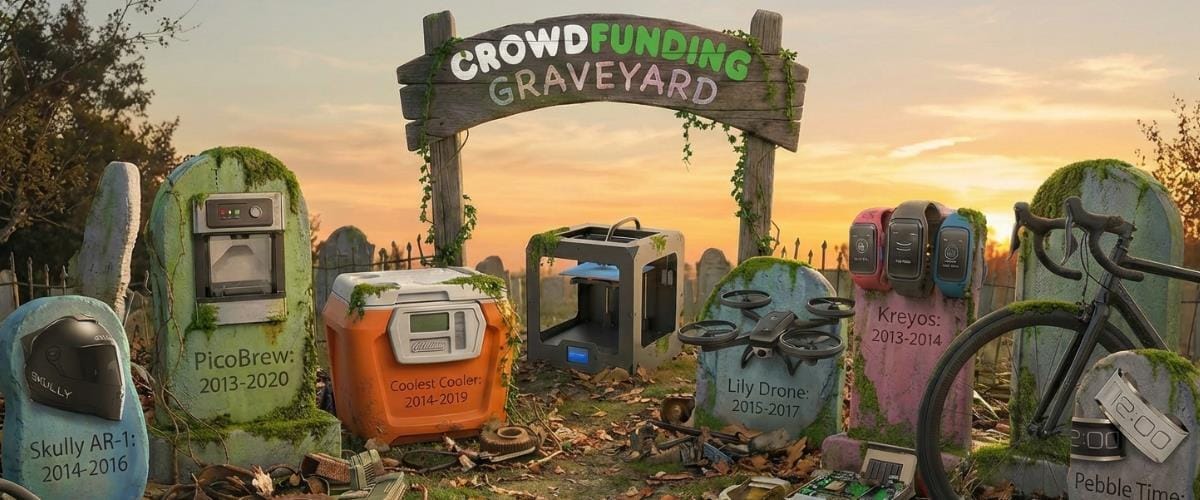
Every hardware crowdfunding campaign ends one of three ways. It doesn't fund. It funds and ships. Or it funds wildly, tech blogs gush, waitlists grow... and nothing ever ships.
That third outcome is the one nobody has summarized well, until now.
We got curious. A lunchroom debate about which projects actually deliver turned into a research project covering 41 failed projects that raised $122.5 million and left 520,000 backers empty-handed.
What we found surprised us. 85% failed because the creators weren't ready for manufacturing. Great ideas, slick videos, real enthusiasm, but when it came time to actually build the thing at scale, they couldn't.
Crowdfunding is great at measuring demand. It tells you nothing about whether you can actually build the thing. That's where projects die.
We built a free database so you can see exactly what went wrong with each one. And a checklist covering the 7 things to lock down before you ask anyone for money.
30 Years. 1,200 Products. Our Biggest Year Yet.
Kevin Bailey left a global telecom design team in 1996 because he loved building physical electronic gadgets. Thirty years later, Design 1st has commercialized over 1,200 products and 2025 was our strongest year on record.
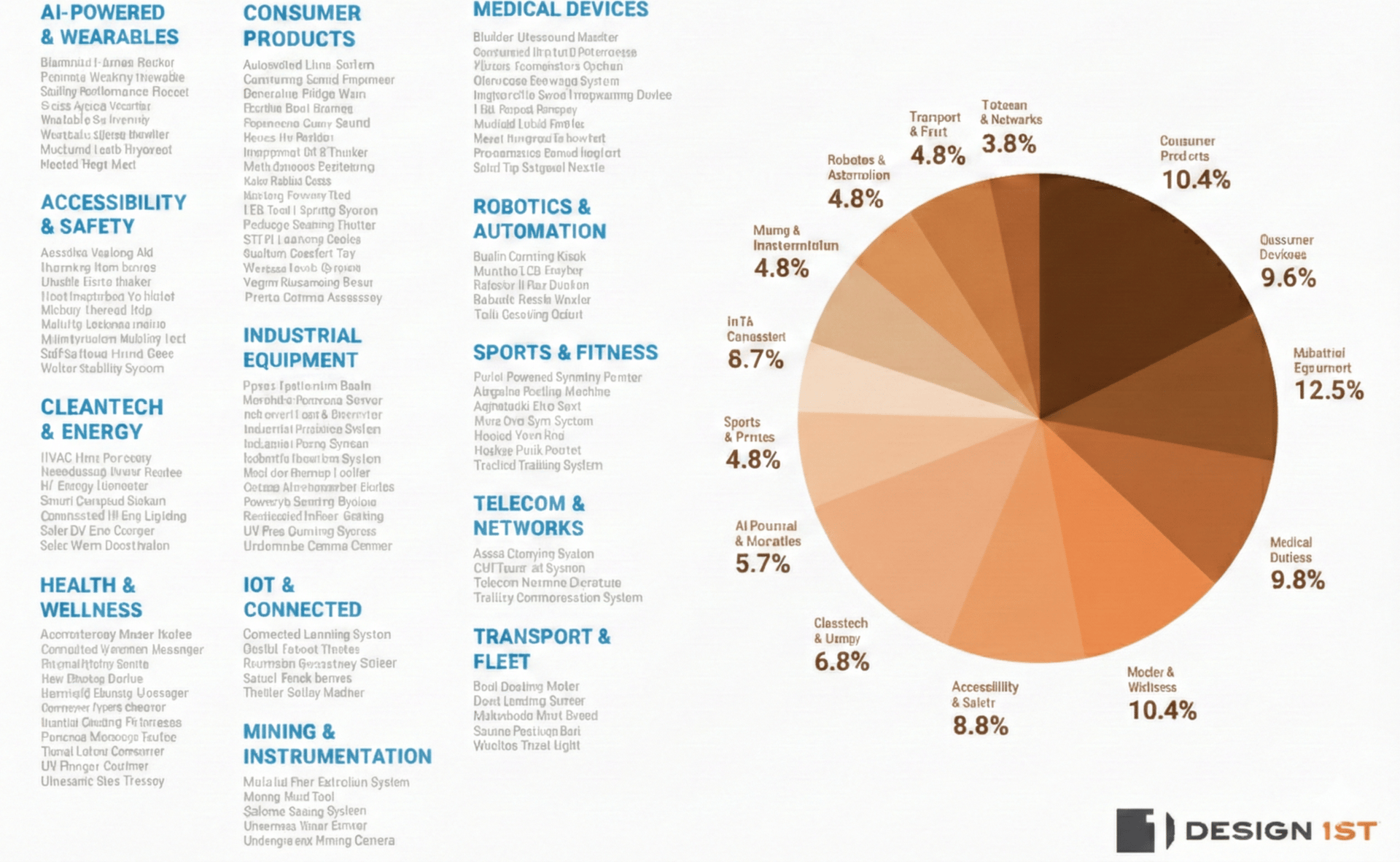
2025 project summary: 103 products in development across 16 industries
We've grown to meet the demands of modern hardware. Products got smarter, so we acquired an electronics firm. Regulatory requirements tightened around medical devices, so we built that expertise. Clients struggled to move from prototype to factory floor, so manufacturing support became part of the offering. Industrial design, mechanical engineering, electronics, firmware, prototyping, and manufacturing setup under one roof.
As Kevin puts it, "The next thirty years will look nothing like the last thirty. That's exactly why this work stays interesting."
30th Anniversary Coverage:
Design 1st Celebrates 30 Years of Product Development (EP&T Magazine)
Design 1st Marks Milestone in Electronic Design (Canadian Manufacturing)
Full Press Release (PR Newswire)
Design 1st Marks 30 Years Bringing Products to Market (Globe and Mail)
Client News and Product Launches
We're excited to share our clients' recent wins, record-breaking Kickstarter launches, celebrity partnerships, viral breakthroughs, and industry recognition. Here's how smart product development translates to real market success.
🎶 Groove Thing’s Kickstarter Raises Over $500k USD
The world's first internal music player, developed by two entrepreneurs and productized by Design 1st, raised $100K in the first 12 hours and closed the campaign with over $500K (USD) in funding. Now moving toward volume production.

🔬 ABI Technology Launches SSM Field 4Z A portable nondestructive testing system designed for in-situ material evaluation. Built for field contractors and rope access in harsh offshore environments.
💨 Calibre Bio Hits the Market The wearable breath monitor we helped develop went from lab-grade sensors to a shipping consumer device. Three design awards and growing buzz in the health tech space.
🎯 Case Study: Failing Fast Done Right A tech PM hired us to evaluate her hardware concept. Our checkpoint process caught the cost problem early. She walked away, saved $200K+ and 18 months for her next idea.
🤖 SwabBot™ Unveils SEAS 2.0—Rapid Access for Automated Cleaning
Plug-and-play module halves setup time; customer trials begin this summer.
🏒 OneTimer Hockey Prototype Goes Viral A prototype we built hit 300K+ views on TikTok. Hockey players at every level are asking where to buy it.
10 Trends Shaping Physical Product Development
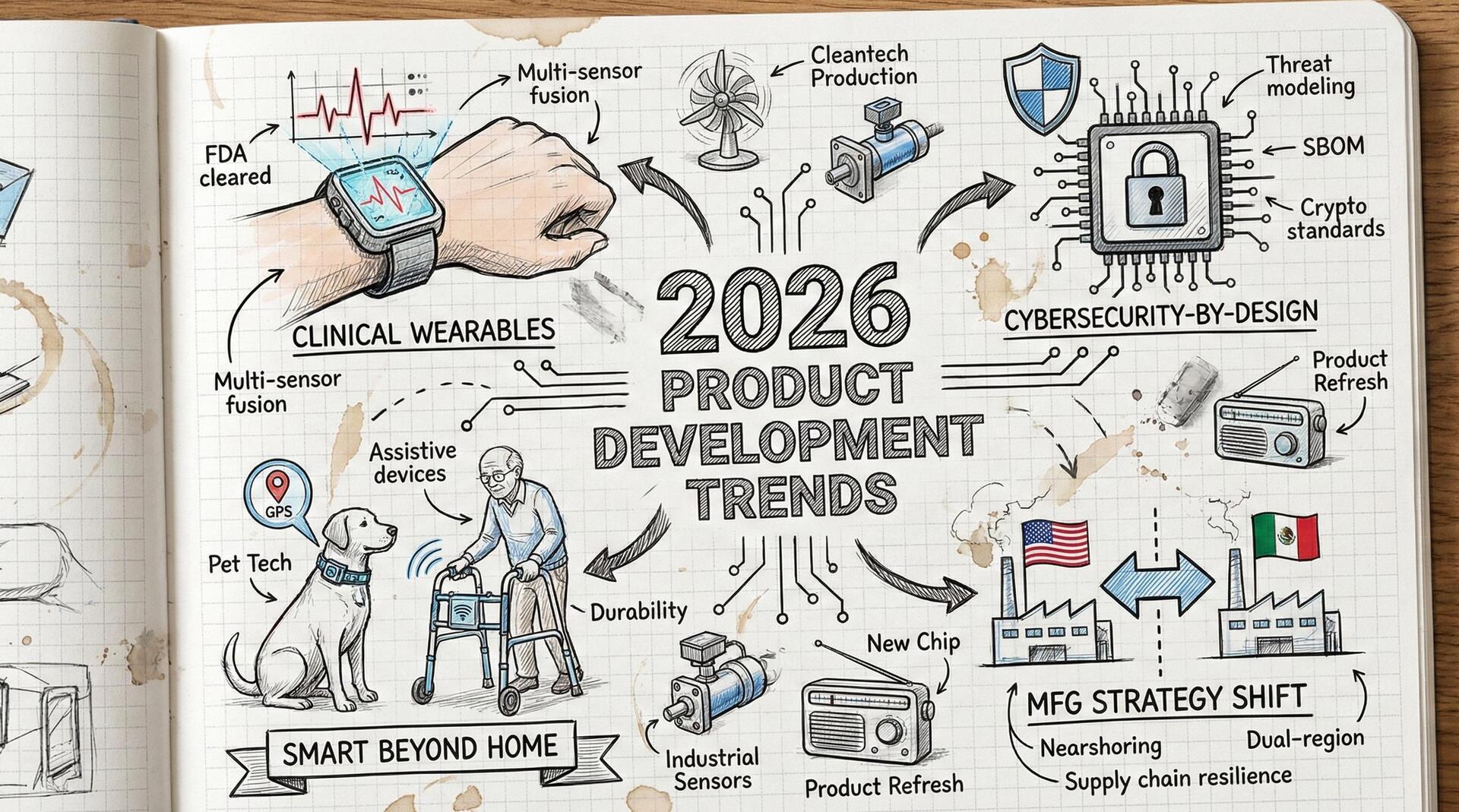
Last year we worked on over 100 physical hardware projects across medical devices, consumer electronics, cleantech, and industrial equipment. We’re seeing trends emerge across multiple areas that we wanted to make you aware of.
Regulatory shifts, manufacturing economics, and technology maturity are converging faster than most teams expect. If you're planning a product launch, here's what's coming down the pipe.
Design 1st Client Feedback
When BlueKit Software needed to bring their no-code educational platform into the physical world, they faced a classic challenge: How does a software team design and manufacture a custom cellular IoT device? Design 1st guided them from concept through production-ready prototypes, hitting their trade show deadline and turning a software company into a hardware success story.

Image: BlueKit hardware enabling hands-on IoT learning in the classroom
Recent Review from Clutch
"We are a software-focused team and I valued not only Design 1st's technical skill in developing a complex cellular IoT device, but also how they took the time to guide us through the hardware development process, explain trade-offs, and help us make informed decisions. Their flexibility and collaborative approach allowed us to adjust design elements and iterate while staying on track."
AI Tools to Accelerate Your Product Development
We've been busy building AI tools that leverage 30 years of product development experience. Budget estimates, funding sources, product requirements. All our tools are free to use and designed to help you plan smarter from the start.
Budget Builder: Data-driven instant estimates for timeline, expertise, costs, and challenges for any physical device development project. You can export as PDF.
Find Funding Tool: Local, national, and global funding sources matched to your product stage and industry.
Product Requirements Generator: Have an idea but don't know where to start? This helps you build a PRD.
Top 20 AI Tools for Product Development: Our curated list of external tools, updated for 2026.
Prompt School: Product Risk Assessment
Skip hours of funding research. This prompt delivers a customized list of local, national, and global funding opportunities based on your specific product and stage. The more details you provide, the better your results.
Instructions: Add your product description to the prompt below, copy it into Claude (our favorite), ChatGPT, Gemini, or your preferred LLM, and hit enter.
YOUR PRODUCT IDEA: [ENTER YOUR PRODUCT DESCRIPTION]
YOUR STAGE: [CONCEPT / PROTOTYPE / PRE-PRODUCTION / OTHER]

I'm developing a physical hardware product and need a risk assessment before I invest further.

Research current regulatory requirements, component availability trends, and competitive landscape relevant to this product category.

Analyze risks across five areas:
- Technical (feasibility, complexity, integration)
- Manufacturing (DFM issues, scale-up, tolerances)
- Regulatory (certifications, timelines, regional requirements)
- Supply chain (component availability, lead times, sole-source dependencies)
- Market (competition, timing, pricing)

Format as a table with columns: Risk | Category | Severity (High/Medium/Low) | Why It Matters | Mitigation

Start your response with the three highest-severity risks summarized in plain language.

End with: questions you'd need answered to refine this assessment, and one thing I should investigate this week.

Be direct. Flag anything that could kill this project.